Showing posts with label kamathipura. Show all posts

Saturday, December 19, 2015

HIV/AIDS and Commercial Sexual Exploitation

By Dr. Pravin Patkar
(This article first appeared in the broadsheet DNA on 13 December 2015 as one half of an open debate in a piece titled "Two sides of the debate: Prostitution as livelihood or victimhood?")
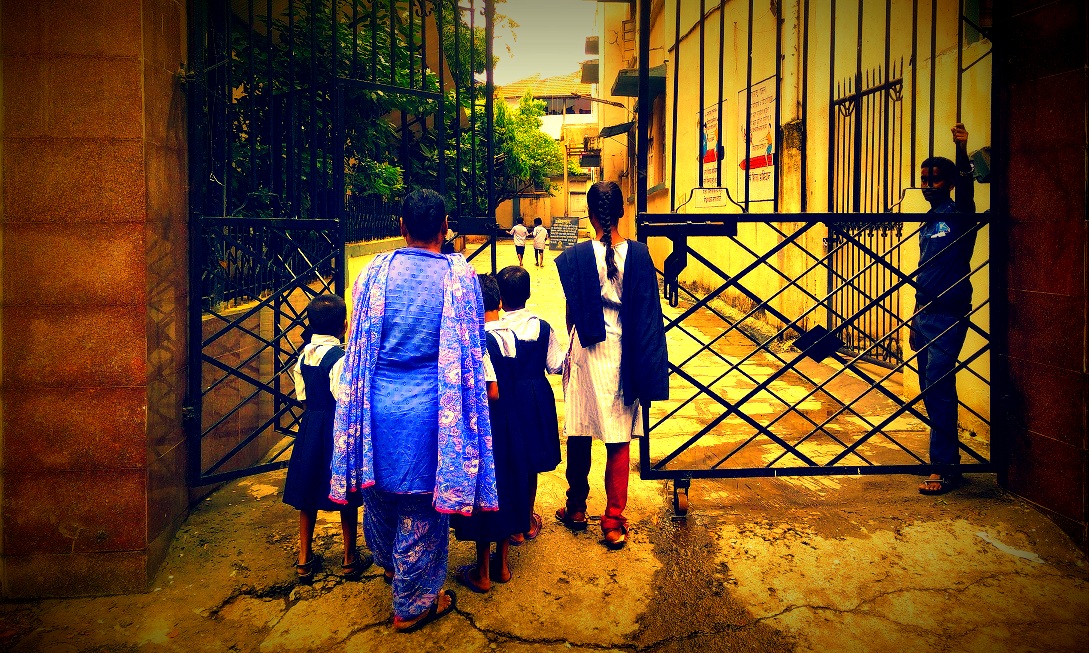
We at Prerana believe in comprehensively protecting girls, young women and their children from being trafficked for sex trade and help them gain dignity and livelihood options. This understanding has come from working for decades in Kamathipura, Mumbai's oldest red-light district, where we often face dilemmas on intervention when mothers who have AIDS come to us with HIV positive children. Planning intervention strategies if the mother dies first or if the child dies first can be heart wrenching.
The national level HIV/AIDS control programme is entirely insensitive to such recurring tragedies of the suffocating darkness of the red-light areas. A darkness which got further poisoned with the advent of HIV/AIDS. Everyone wanted to blame prostituted women. The nation responded with a national programme of AIDS control, suspected to itself be controlled by multinational pharmacy majors. At the ground level, this programme was hijacked by sex traders and their advocates. Fearing customers would would run away from the trade they were desperate to save, they conspired to turn the threat into an opportunity by projecting themselves as primary movers of the national HIV/AIDS programme. Without a thought for the vulnerable…, they would only strive to popularise condom use.
This, when many like us working with the community for decades have never judged women in prostitution as immoral. In fact, we've consciously worked to overcome their incorrect self perception of being 'morally loose' and make them understand that they are the 'wronged ones and not wrong'.
Sex traders harp on a false conflicting dichotomy of HIV/AIDS workers and anti-human trafficking civil society organisations when in reality the problem is that of sex traders operating as HIV/AIDS workers The latter are committed to protecting business interests of traffickers, brothel keepers, pimps and customers and mainly engage in condom promotion and getting the sex trade decriminalised (i.e. not to treat trafficking, kidnapping, confinement, pimping, brothel keeping, detaining someone for prostitution, inducing, buying selling someone for the sex trade as punishable crimes).
What the law says
The Immoral Traffic Prevention Act 1956 (revised in 1986) does not prevent an adult person from selling his/her bodily sex* in private premises to a heterosexual partner. It defines prostitution as 'sexual exploitation of person for commercial purposes' by dropping the previous 1956 definition 'prostitution is sale of sex by a female'. Against organized sex trade, it penalizes brothel keeping, pimping, trafficking, procuring, detaining a victim, offering premise for brothel-keeping, seducing, soliciting etc which are essentially sex trade activities. In fact, this women-victim-friendly law suggests that magistrates don't punish women booked under this law but orders the state to provide them alternate livelihood.
While the 1986 revision only bettered the law's victim-friendliness, the Criminal Law Amendment 2013 in the Indian Penal Code has made it next only to the world's best - Swedish law (the Nordic model) - on prostitution.
In a publication Muktatechi Bharari (Flight of Freedom) by SANGRAM and VAMP (a collective of sex workers), their leader Meena Seshu recommends girls be brought in the sex trade three-four years after menarche. Prostituted women on the other hand reiterate: "We don't want our children to get into this trade. They shouldn't suffer like we have."
Studies on the devadasi system (Jogan Shankar, M. Sunder Raja), the biggest supplier of young girls for the sex trade in western India, establish that only pre-pubescent girls could be dedicated as devadasis. Most modern studies conclude that a large number (over 80 percent*) of victims in the sex trade are below 18 or trafficked when below 18. The sex trade predates on children!
The condom promotion programme protects customers not women. Credible research from sources supportive of 'sex work' also shows that a large number of prostituted women are HIV positive.
Appropriate Approach
Malaria cannot be controlled by merely distributing mosquito repellents and nets but by managing stagnant water properly. Similarly, scores of women - victims of discriminatory hierarchies of caste, class, status, gender, disadvantaged by several layers of marginalization from drought to gender-based violence and affected by personal tragedies like orphaning, domestic violence, sexual harassment at workplace - become easily available for sex trade that exposes them to fatal infections and condemns them to a life of indignity, stigma and discrimination. Projecting that as voluntary work chosen by the women adds insult to injury.
The sex traders' representatives' absurd theory of empowered prostituted women leaves many questions unanswered. Why are they several times more susceptible to HIV/TB? Why are many of these women homeless? Why do they shun cameras? Why do they complain of police extortion? Why can't they on their own send children to good schools? Why don't they have toilets/kitchens for themselves in brothels? Why do they end up begging in old age? Why don't they have savings, health insurance and old age pension?
Why do they live in such filthy, stinking, dark and ill ventilated cubicles?
The destinations of human trafficking represent the modern form of slavery. They are incompatible with civilization and human rights. The crime syndicates must be busted and the guilty must be severely punished. Economic development policies that create large scale vulnerability, disintegrate indigenous protective mechanisms and support systems should be abandoned.

* - indicates changes made to the original article published in DNA
(pictures sourced from pintrest)

Tuesday, July 7, 2015

Prerana's Outreach: Protecting Vulnerable Children in Mumbai's Red Light Areas

IMG-20150121-WA0006


The Kamathipura red light area is a constantly buzzing hive of stinging viciousness and extreme danger, particularly for children who are captive candidates for being trafficked. One of the main reasons why Prerana’s centres are located right in the midst of the red light areas is to ensure that we are constantly on the vigil and able to track the children’s situation and movements.

Our strong presence in the red light area and our intensive outreach system helps us in identifying children who are at risk and hence in need of immediate care and protection. We have, in the past been able to ensure successful protection of a large number of children owing to timely detection and intervention. 

In the beginning of our intervention we faced several challenges and found ourselves clueless as we had yet to grasp the situation in its entirety. Our own understanding was developing in bits and pieces. Over the years we managed to put together the pieces of the jigsaw puzzle and get a complete picture.

Prerana On The Ground


IMG-20150108-WA0041
We started our first intervention in the year 1986 in the Kamathipura red light area of Mumbai. In response to the various challenges before us Prerana evolved many need-based programmatic interventions which, later we realized, were radical in many ways. Extensive outreach is one such important component of our intervention in the red light districts of Mumbai. 

At the time, the State and the civil society had a common stance vis-a-vis the sex trade-tolerationism. In an informal way of zoning, the activity was tolerated by both despite knowing very well that what was happening inside those zones was highly illegal and criminal. It was conveniently labeled as immoral and ghettoed. 

As the population in the island city of Mumbai grew along with the operations in the red light districts the clashes between the sex trade and the civil society became frequent. The sex trade placed the prostituted women on its ever increasing peripheries and the civil society hit back by condemning the women and pressurizing the police to unleash brutal violence against them. One of the factors that made Prerana locate its services right in the heart of the red light districts was to ensure that women don’t get exposed to such repression while using these services and that the fear of the repression does not prevent them from availing the services. 

The sex trade in the red light districts of Mumbai has been operated by multiple criminal gangs for the past several decades. The elements of criminal captivity and control continue to characterize these districts. Captivity was a little higher for those trafficked women who were recruited from the non-Devadasi belt. (The traditional Devadasi cult was a major source of supply of prostituted women to Mumbai). The prostituted girls and women from Nepal and Bangladesh fell in this category. 

The element of captivity and control by the sex traders was so rampant that some women could not easily walk around within the confines. Most Nepali girls and women were confined in cages which had shutters and locks. We decided to overcome this hurdle by personally visiting the brothels. We prepared a team of our social workers and para professionals and invested in them. That paid good dividends and created the foundation of our outreach team. 

As the children of the red light area based prostituted women face indescribable trauma, violence and deprivation especially in the peak business hours we started night time crèches for them in a class room in a local public school building. We named it the Night Care Centre since the term ‘crèche’ was incapable of capturing its significance even minimally.

Meeting Radha and Bholi

09-prerana-7660
During one such outreach visit in the year 1999 our team first met Radha Nepali (name changed) in a brothel in Kamathipura. Radha was trafficked from the extremely backward north western hilly region of Nepal. When she was sold to a Nepali brothelkeeper in the redlight district, she was 16 years old. She had a 3 year old daughter, Bholi (name changed). The team verbally informed Radha about the various child protection and welfare services Prerana had started and proposed to her to send Bholi at least to the NCC Radha’s brothel keeper seemed open to the idea of sending Radha and Bholi out of the brothel. Our overall strategy proved correct. 

We had strategically avoided openly confronting the brothel keepers and showing all our cards. (more about this on some other occasion). We thus overcame that hurdle effectively and managed to have Bholi admitted to the nightly shelter the NCC. Radha proved to be a responsible mother and attended all the monthly meetings meant for the mothers. Bholi adjusted very well to the NCC. 

Soon after that in the year 2000, Radha’s heath began to fail. We supported her for a complete medical check-up. Finally the HIV test was conducted as per the advice of the doctor and Radha shared the result with us. She was detected HIV positive. Although she was provided all the necessary support in terms of nutrition and medicines, Radha succumbed to a co-infection of HIV. Bholi was then barely 5 years old. In her last days Radha was very concerned and vocal about the future of Bholi. She repeatedly requested us to protect her from the sex trade. 

Soon after Radha’s death, her brothel keeper stopped sending Bholi to the NCC. She even started hiding Bholi inside the brothel every time she found that Prerana’s Outreach team was on its way.

Rescuing Bholi

Story 2
Some brothel keepers had allowed the children to attend the NCC and such other activities hoping that by sending their children to the developmental activities of Prerana they would be able to modernize and scale up their business by having well educated and English speaking prostitutes. For other brothel keepers, having a child of the prostituted women in their brothels was like having captive free-of-cost recruit who could be sold anytime or put to the trade eventually. Radha’s brothel keeper was of the second type. She wanted Bholi to take the place of Radha. Sensing the danger that Bholi will be trafficked we decided to have her officially and legally rescued. 

As a part of the overall strategy, Prerana always avoided appearing prominently in the forefront of rescue operations. We had been regularly networking with civil society anti-trafficking organizations whose primary focus was facilitating rescue. 

In September 2002, in a search and rescue operation conducted by the local police and facilitated by the said rescue organization Bholi was rescued and produced before the Juvenile Welfare Board (after the 1986 amendment in the Juvenile Justice Act the same is renamed as Child Welfare Committee) who placed her in a shelter facility for girl children. 

After 6 months, she was transferred to yet another suburban shelter facility as the previous one could not keep girls above 6 years. Bholi was just about to turn six.

Tracking Bholi

Story 1
Prerana’s outreach was not confined to the red light areas. We tried to maintain regular contact with the children even after they got placed in institutions of residential care and development. It is not always possible to do so in every case as many factors such as the overall managerial culture and worldview of the organizations running the shelter, the inclination of the person in authority etc all would determine whether our continued contact and inputs to the child would be allowed or not. In Bholi’s case the organization was open to our continued follow up and cooperated very well.

Bholi’s Progress

IMG_20150615_131445-001
For 10 years after, till the age of 16, Bholi lived in the suburban shelter. Prerana followed up with her progress and well-being closely and consistently. Our Institutional Placement Programme Team (IPPT) made it a point to meet Bholi once every month. Although we place these children in outside shelter facilities our programs are inclusive for all children we come in contact with. The IPPT ensured that Bholi participated in all our outdoor camps and special workshops. Bholi regularly spent the month long summer and Diwali vacations at Prerana’s centres. We noticed that Bholi had developed the capacity for independent thinking. She possessed a courageous temperament. She was open to admit her mistakes and got along very well with everyone around. A harmonious and professionally collaborative relationship between Prerana and the Shelter was very crucial for this process. 

In her stay at the shelter facility Bholi developed a trusting relationship with an older girl named Gopi (name changed) who was also a resident of the same shelter and a Prerana beneficiary. Both of them bonded very well and Gopi assumed the responsibility of mentoring Bholi. When Gopi turned 18 and was ready to move out of the shelter facility she expressed her desire and commitment to take charge of Bholi when she (Bholi) turned 18 years and got ready to move out of the shelter.

Higher Studies

IMG_1413
In the academic year 2012-13, Bholi passed her 10th standard Board examination with 51% marks. She then moved into Naunihal (a shelter facility run by Prerana) in June 2013. We worked on her care plan in which she had expressed her desire to learn computer technology and take up a front desk job. When Bholi turned 17 we helped her get enrolled for a Diploma Course in Computer Applications at a Computer Education Centre in the Central suburbs of the city. 

Simultaneously, in the month of June 2014 Bholi appeared for an entrance exam of the Yashwantrao Chavan Open University. Bholi passed the entrance exam and is now pursuing her Bachelor’s Degree in Arts. Bholi also completed her computer course successfully. As she turned 19, she moved out of Naunihal and into our Falkland Road Night Care Center. 

In the month of November 2014, upon Bholi’s request, she was enrolled in an eminent Foundation for a Vocational Training program in Hospitality for a period of 3 months (the name of the Foundation is not disclosed to protect Bholi’s identity).In January 2015, Bholi was given an award for Full Attendance at the training institute during an Award Ceremony organized by that Foundation. After the completion of her course, Bholi was placed as a front desk operator in a popular laundry chain that is currently gaining considerable popularity in Mumbai city.

Prerana Will Always Be There

09-prerana-7999
As is obvious from Bholi’s journey, it takes great efforts to ensure not just long term protection but also care development and future planning. The task of an organization does not end with just rescuing a child. Appropriate follow-up and hand holding are integral to the post-rescue component. Successful social mainstreaming requires that holistic services and facilities are made available to the child in a timely manner. Furthermore, the case also brings forth the engagement of another girl, Gopi, who tended to the needs of Bholi. This highlights the manner in which Prerana encourages and engages with children.

Currently, Bholi is very well settled and has been socially mainstreamed with a steady and decent income. And Gopi never forgot her promise. When Bholi turned 18, she took her into her own house. They are now part of one happy family.

-  Dr.Pravin & Priti Patkar

Wednesday, January 14, 2015

Kamathipura Red Light District a Vanishing Hell Hole!


(The infamous brothels of Kamathipura are living out its last days. Even as this shift is largely attributed to imminent redevelopment brought out by the construction boom, many activists and organizations have dedicated entire lives in getting these hellholes to shut.

Recently Mr. Jason Burke India correspondent of  The Guardian published a story on it. Click here for the link.)


We were glad we had the opportunity to facilitate Guardian UK’s India Correspondent Jason Burke’s visits, meetings, consultations, and discussions on the fast changing real estate scenario in Kamathipura and Falkland Road. the prime red light districts of Mumbai . When we started our intervention in 1986, we had hoped that some day gangrenous wounds like these areas would disappear from the face of the earth. Perhaps in our own life time. Of course, the real estate market is playing a key role in the current physical transformation described in Burke’s article. We don’t claim to be the prime mover in this specific process but we have worked tirelessly to ensure that the children choose their lives. That mothers walk out of the hell on their own before the hell is destroyed. And that when their wounds heal, no scars are left behind.

No single actor or factor can bring about any major social transformation. Several factors operate simultaneously on every phenomenon. As social interventionists, we are judged by our ability to evolve and use appropriate strategies to get the most desired outcome from the interaction among the many forces of change affecting a situation. It is important for social workers have to carefully choose their stance and moves in order to get the result they seek.

A decade ago when the red light area of Goa at Baina beach was razed by the state government, Ms. Nirmala Sitharaman (then a member of National Commission for Women -NCW and currently the Union Minister – Commerce and Industry Govt of India)and I were sent by the National Commission for Women as Observers to study the situation and report back. If I remember well, a previous Committee headed by a retired high court judge Justice Kamath had recommended that the red light area should be reconstructed by the government at a suitable nearby location. Many local civil society organizations supported the recommendation and demanded action on it. A few of them even submitted a list of the brothel keepers and pimps and demanded their rehabilitation in the same trade on priority basis. Truly unfortunate demands! I remember we had two meetings with Mr. Mohan Parrikar, (then Chief Minister, Goa and currently the Defence Minister of India) where he expressed dismay over such demands.

In Kamathipura, on the contrary, we strongly believed that every effort must be made to make the traffic-based sex trade non-feasible. We tried to erode the very foundation of this exploitative market by cutting the supply- by ending inter-generational trafficking and by giving to the local children the mantra of a dignified life. We trained and pressurized the police, facilitated incessant raids and rescues and evolved the art of the post rescue operation in order to get the freshly trafficked victims, minors and young women out for good. We provided to them alternative livelihoods. The trade was thus made nonviable. We are glad we played our modest but decisive role in the fight against the modern day slavery of sex trade.

The lives of a couple of tens of thousands of women and their children were decisively and positively transformed through the last three decades of our work – several thousand children were protected and acquired alternative dignified lives, thousands of minor girls and women walked out of the cages never to get re-trafficked.

Let the last brick of this highly infamous and criminal slave camp be razed to the ground. Let a memorial be built in its place which will inspire future generations to declare a non-negotiable position against slavery.

Let all such ugly hell holes disappear from the face of the earth… in our own life time.

Let all human beings enjoy the freedom to choose a life of dignity.

Let the world become a peaceful and fair place!

Lokaha Samastaha Sukhino Bhavantu!

- Dr. Pravin Patkar
Co-Founder PRERANA
Adjunct Professor – Amrita Vishwa Vidyapeetham 

(I thank Ms. Priti Patkar for providing overall assistance and our staff Ms. Mugdha Dandekar for taking Jason around in the red light area. I thank both of them for arranging for his interaction with the prostituted women in the community and at our center.)

Also visit Prerana’s Aarambh:  http://aarambhindia.org

Friday, November 28, 2014

Understanding Legalization of Prostitution

 (An edited version of this article first appeared in DNA Mumbai as 'Why the NCW's Proposal to Leglize Prostitution in India is Flawed' on 22nd November 2014)

NCW Chairperson Lalita Kumarmangalam’s proposal to legalize prostitution and the comments thereon have a thing in common, inaccurate understanding of the problem and its solution. Her medicine is deadlier than the disease especially when the civilised world is fighting human trafficking and sexual exploitation.  Naïve supporters of the policy appear to  be misled by the magical term ‘legal’ (like  ‘development).  Tomorrow they may also support legalization of rape believing that now onwards rapes will be legal and therefore proper.

A person above the age of 18 years, selling his/her bodily sex against money or kind to another major person of opposite sex (the uncertainty on IPC Section-377 is temporarily over with the Supreme court upholding it.) in his /her private premises (a privately owned premise is not necessarily private), 200 meters away from a place of religious worship, a hospital, an educational institution or any place notified by the government (Sec-7) is not a crime under any Indian laws including The Indian Penal Code-1860 or The Immoral Traffic Prevention Act- 1956. The Indian law bans the acts of trafficking, procuring, detaining, pimping, lending a premise for carrying on prostitution of for running a brothel. Soliciting in public places for prostitution is punishable (Sec-8) but a woman arrested under Sec-7 or Sec-8 is not to be punished but to be given a chance of rehabilitation at the state’s cost (Sec-10). In short, the Indian law aims to punish the exploiters like madams, pimps, traffickers, customers, and other partners aiding the exploitative sex trade but not the prostitute woman. 

By legalizing the trade would the state decriminalize the offences of trafficking, procuring & detaining girls and young women, brothel keeping or pimping? If the offence of soliciting in public is scrapped from the lawbook then there will be pimps and madams approaching young boys and girls right outside the gates of schools and colleges luring them with money, expensive electronic gadgets, foreign tours to join the sex trade. Parents and teachers will helplessly witness it as they will be arrested for not allowing the pimp to carry out their legal business. Should this legal position be rejected? 

If the government wishes to serve the victims of prostitution what stops it from doing what the small civil society organizations have done best? Aren’t these women the citizens of this country? Haven’t the High courts and the Supreme Court from time to time upheld the prostituted women’s constitutional legal and human rights? Why does the NCW think that to assist a rape victim first rape must be licensed?

The origins of the women’s emancipation movement is aptly attributed to the struggle of Josephine Butler against the draconian British law ‘Dangerous Diseases Act 1865’ which was the main expression of legalization. It caused public outcry in Britain and its colonies between 1865 and 1885 when it was finally repealed as it was seen as anti women instrument leading to excessive power abuse by the health officials and police. An indispensable component of legalization is compulsory periodic medical testing (CPMT) justified to curb the sexually transmitted infections.  Clinically speaking an actually infectious person may turn out to be negative in the test if his  infection is fresh. This is because of the window period. So a person holding certificate of negativity may be actually spreading the infection.  The CPMT creates a false sense of security in the client who throws caution to the wind and indulges in unsafe sex. STIs/HIV infections actually increase under legalization.


Under legalization would the state issue licenses to the children (currently > 40% of the victims), the HIV positive victims (> 50% of the victims), the illegal migrants and trafficked aliens mostly the Bangladeshis? If not, where will they all go if not underground? If the government wants to rehabilitate them then who has stopped the government from doing that right away? Everyone in the country except the daroga (the police) knows where to find these women.   In countries that have legalized the sex trade two layers of prostitution have emerged a very thin slice of registered legal activities and a huge chunk of illegal activities where women become more vulnerable and suffer extreme exploitation as they are forced to go underground.

Men’s confidence in assaulting any woman goes up when they experience that buying the sexuality of some women is legally supported and risk free. All they need to do is to create vulnerabilities and keep the money ready. If in spite of the law millions are getting trafficked and over 40 millions are currently living the life of sex slaves why would the crime go down with liberalisation of the law. It is like saying no one will fail if the exams are scrapped.

As legalization will mean keeping many registers, filing returns, paying taxes and greasing 10 more palms the sex traders have rejected legalization.  Only the pharmaceuticals and the govt. health babus still demand legalization even after knowing its futility.

Dr. Pravin Patkar
Co-Founder Director - Prerana
Adjunct Professor - Amrita Vishwa Vidyapeetham